
Slaying Democratic Dinosaurs
What El-Sayed's victory in Michigan says about American politics writ large.

This newsletter is for and about you — witnesses to an age of acrimony and anxiety.
THE MOST CONSEQUENTIAL campaign of 2026 is over and the results signal a potential extinction event for the Democratic Party establishment.
Dr. Abdul El-Sayed defeated Rep. Haley Stevens in a Senate primary ripe with signposts about the future of the Democratic Party and American politics writ large. It pitted:
An agent of change versus the belle of the status quo.
An ultra-left candidate versus a moderate.
A pro-Palestinian candidate versus a pro-Israel candidate.
A Muslim versus a Christian.
A charismatic populist versus a gritty pragmatist.
The Left’s momentum versus the Establishment’s money.
After a brutal and expensive campaign that also reflected the nation’s gender wars, the underfunded charismatic progressive pro-Palestinian Muslim insurgent narrowly won. It was an astonishing result for anybody not paying attention to the cultural and political shifts in America since the turn of the century.
While El-Sayed’s margin of victory was far closer than expected, that says more about lousy polling in Michigan than broader political trends. Yes, he needs to drag Black and blue-collar Stevens voters into his coalition, but take a step back and consider this: In normal times, an ultra-progressive Muslim populist would not defeat a moderate establishment-backed Christian in a purple state like Michigan. In normal times, a candidate like El-Sayed would not stand a chance in a general election.
These are not normal times.
The public has lost faith with the social institutions that are the glue to a functional democracy. Government, politics, corporations, the media, organized religion, organized labor, banks, businesses, and other mainstays of a healthy society have failed to adapt quickly enough for a population buffeted by wrenching economic, technological, and demographic change. The 9/11 terrorist attacks, the 2008 financial crisis, forever wars, toxic new media, a pandemic, and durable inflation — while one crisis after another pushes everyday Americans to the brink, what has been the response from the two major parties blessed with a monopoly over the U.S. political system? Dysfunction, corruption, and polarization.
History tells us that times like these give rise to populists.
It happened first on the right with the Tea Party in 2009 and President Trump’s MAGA movement in 2016. Populist voters and the opportunists they put in office exiled the GOP establishment to the political sidelines.
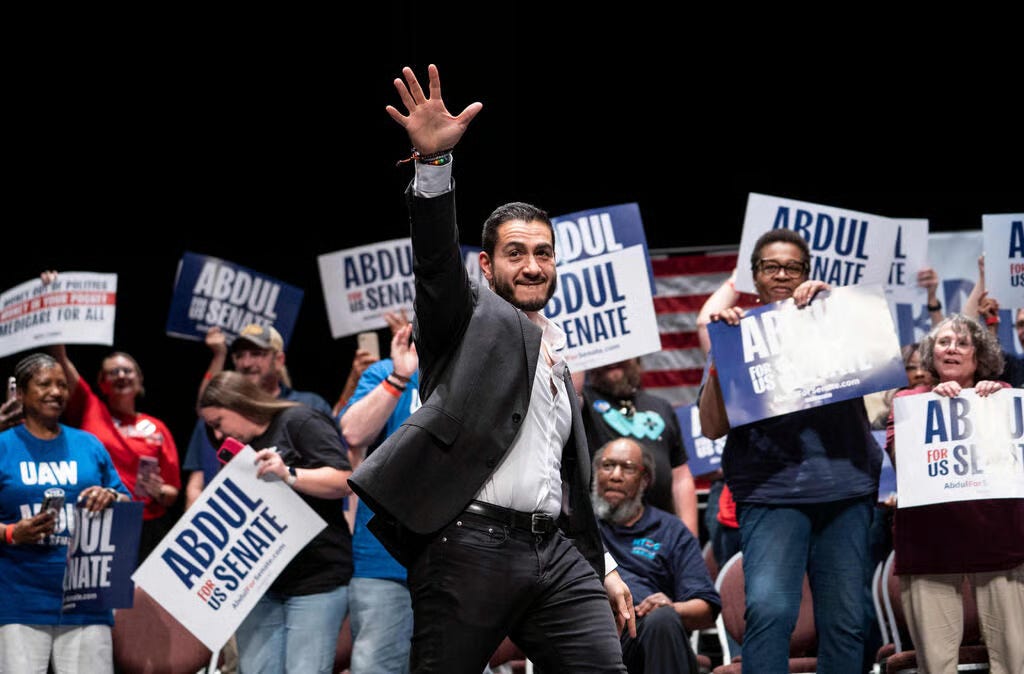
At a micro level, El-Sayed is a better political athlete than Stevens. His victory is owed in part to lingering animus among Muslims and young Michiganders for how those voters’ pro-Palestinian views were dismissed and denounced in 2024 by Democratic leaders, including presidential candidate Kamala Harris. But something bigger is at play here. As I wrote the other day, this race was a metaphor for a radically shifting U.S. political landscape.
It’s a competition between the establishment wing of an ossified party and insurgent outsiders who believe their team has grown too soft, too moderate, and too accommodating toward the opposing party. These disruptors don’t forgive compromise or dissent. They embrace labels and push policies that would have seemed unfathomable just a few years ago. Does any of this sound familiar?
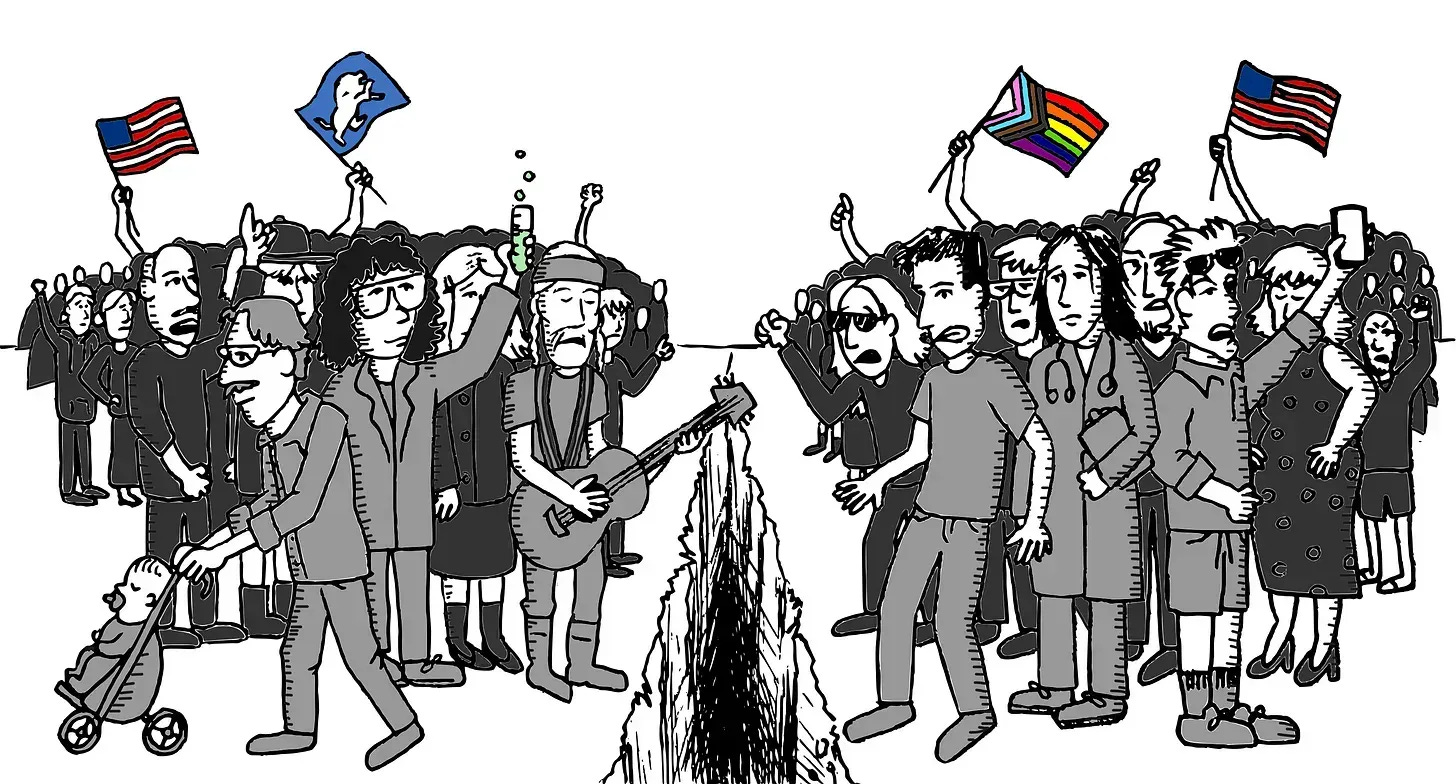
Even if you, like me, consider MAGA and President Trump to be malignant cancers on the body politic, you can’t ignore the fact that a growing swell of American voters is rightfully disgusted with how both parties are leveraging their monopolies — and this rise of insurgents on the far right and far left may soon lead to a radical realignment of U.S. politics.
Nor was El-Sayed’s victory an isolated event. A grass-roots organizer and climate activist from the progressive wing of the party prevailed in the Democratic primary for a battleground House district near Lansing. Radical populists are winning Democratic primaries throughout the country. Radical populists now run the GOP.
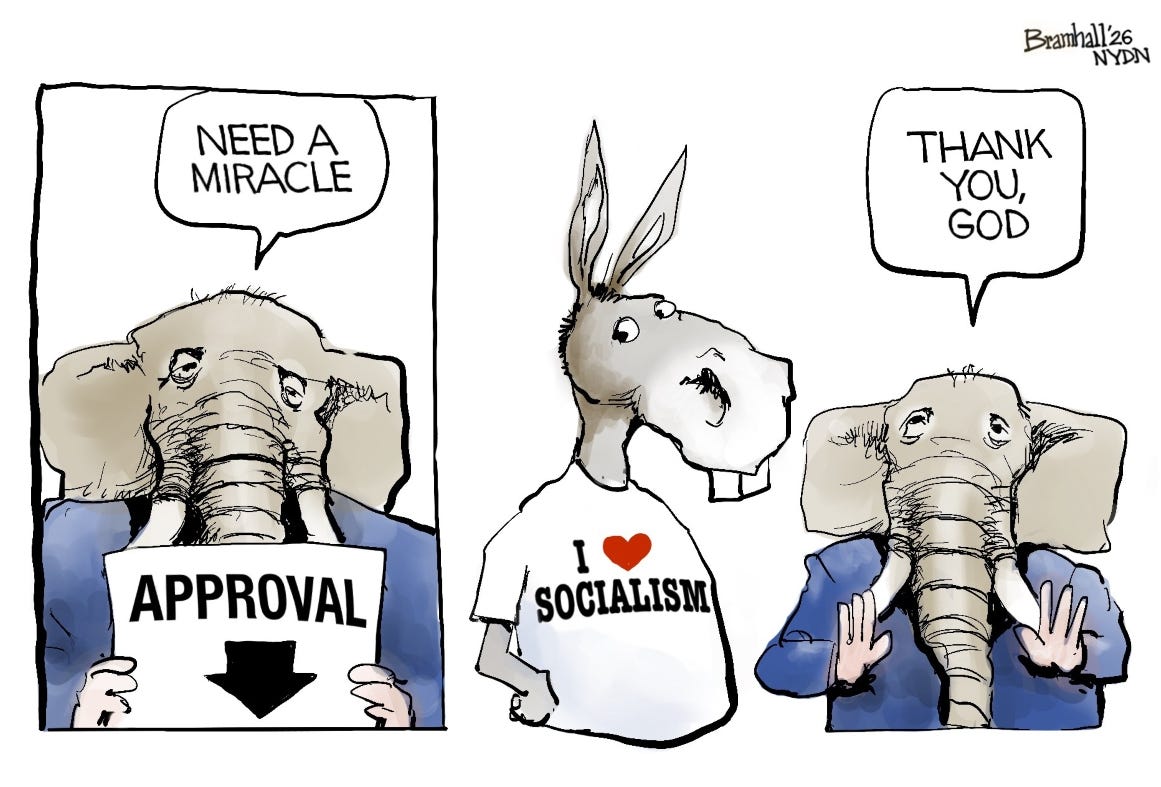
Here’s a provocative question: What do El-Sayed Democrats and Trump Republicans have in common? Answer: They’re mortal enemies of the status quo … of The Establishment … of anybody or anything that has been in control of government and politics since the turn of the century.
I’m not declaring the Democratic Party establishment extinct today, not before the next two election cycles reveal more insights. But one party has already killed its dinosaurs. Who’s to say the Democratic establishment isn’t next?

IF YOU FIND any value in these newsletters, level up to a paid subscription to support my work and get the daily “Morning Read-In,” where I curate the most compelling stories on politics, culture, communications, and life — with micro-essays of insight via the Subscriber-only chat feature.
Actually, regardless of what happens in the general election I' m glad to see the people of Michigan vote for a man that stands up for his beliefs and represents polices that help the working class rather then Wall Street and corporate America, "Playing it safe" with a moderate candidate that is part of the establishment gives us the same old bullshit that helped MAGA arise and the Democrats become the passive lambs that Chuck Schumer and Hakeem Jeffries have consistently exhibited. Are we going to stand up to the oligarchy or not?
McMorrow played the spoiler, even if unintended. With elections that are more and more on the edge, the “edge” vote said, “no thanks” to both the major Dem candidates, further amplifying the break in the party that can’t seem to make up its mind what it stands for. Sayed has a tough road to unite the party behind him. Dems likely just saw their chances for 26 and 28 go down in flames. Perhaps, McMorrow could mount an independent campaign but look for low turnout and party switching votes in Nov otherwise.
Edit: McMorrow just endorsed Sayed.