

Convulsions is a Substack for and about you — witnesses to an age of acrimony and anxiety.
My newsletters are free.
A paid subscription gets you a daily pre-dawn “Morning Read-In,” my curation and conversation around the most compelling stories on politics, culture, communications, and life. Today’s MRI is free in hopes that you’ll join the paid subscriber community.
STORY #1
FBI Director Kash Patel said Tuesday he was open to sending federal agents to polling places in November — an unprecedented, if not illegal, step to assert greater control over state-run elections.
Under the law, armed federal officers or military personnel are barred from being deployed “at any place where a general or special election is held.” The chairman of the Joint Chiefs of Staff said last month there were “no plans” for the armed forces to deploy troops to polling stations for the midterm elections.
“I thought you weren’t going to be sending people to the polls,” Democratic Sen. Peter Welch said to Patel during a hearing Tuesday.
“When did you hear that? It’s just another lie,” Patel spat. Welch had heard it from Patel himself; the FBI director was now reversing himself.
“So you are sending agents to the polls?” Welch pressed.
“We have election crisis coordinators manned at all 56 field offices,” Patel replied. “Election integrity is of paramount importance. This FBI will not shy away from that effort.”
Add this to the long list of ways President Trump and his team plan to declare victories in elections they’ve lost — as Trump did in 2020. This time, he’s better prepared to steal elections.
STORY #2
How deep is Trump’s quagmire in Iran? So deep it takes FOUR news outlets to plumb the depths today.
New photos obtained by CBS News from active military personnel reveal widespread destruction of buildings and vehicles at multiple U.S. positions in the Middle East as a result of Iranian strikes. “This is major damage to our bases that hasn’t been communicated to the American public,” one deployed service member told CBS News. “We’re standing there with our eyes closed getting punched in the face.”
The U.S. military fired up to 70 of its high-end air defense interceptors last week when Iran launched a missile attack on Jordan, The Wall Street Journal reports today, a massive response to attacks that reflect Iran’s improved ability to target U.S. forces and challenge American air defenses.
American consumers have spent about $107 billion more on gasoline and diesel during the Iran war and the Russia-Ukraine war than they would have had there been peace, according to a WSJ story on a report by the Climate Solutions Lab at Brown University.
The Iran war has cost the United States $38 billion so far, the Congressional Budget Office says, and will cost $2 billion to $3 billion a month going forward, not including the costs of rebuilding U.S. bases damaged in the war. Also, the United States will need at least five years to replace the missile interceptors it expended trying to defend U.S. troops and bases. The CBO did not estimate that cost, but it will be massive.

STORY #3
Trump wants Americans to pay for $2.8 billion in high-powered bombs going to Israel, The Washington Post reports, including 40,000 bombs that weigh a ton each and 20,000 Penetrator warheads.
Israel routinely drops the 2,000-pound bombs in Gaza and Lebanon, killing thousands and stirring fierce debates in the United States between pro-Israeli and pro-Palestinian forces.
The White House is seeking congressional approval of the package. This puts Democratic lawmakers in a bind, forced to choose between supporting two voting blocs vital to their coalition, with pro-Palestinian voters in ascendancy.
One of the bombs, an MK-84, sends metal fragments in every direction for thousands of feet, can rip through metal and thick concrete, and often creates large craters in the earth.
The Trump administration calls it a sale, but it’s not. The United States would give Israel the money to “buy” them.
STORY #4
A Supreme Court reshaped by his three first-term appointees has delivered Trump nearly two dozen victories in emergency appeals, according to The Associated Press, often lifting lower court orders that had blocked key aspects of his norm-busting agenda.
But that’s not good enough for Trump. He thinks the court serves him, not the Constitution. He’s truly flummoxed when the court votes against him, as they did Monday in rejecting his scheme to restrict and control mail-in balloting for the midterm elections.
“These are not the people I interviewed to serve on the United States Supreme Court,” he posted Tuesday, chastising justices “for shockingly bad rulings that are of such magnitude that it won’t be easily possible for our Country to recover or heal.”
In cases outside the emergency appeals route, those on the more deliberate traditional docket, Trump has a shakier record. The justices struck down his far-reaching tariffs on nearly every other country, his restrictions on birthright citizenship, and blocked his push to fire a member of the Federal Reserve Board.
STORY #5
Trump has traded more securities than every member of Congress combined since he returned to office, Bloomberg reports.
On his own or through money managers, Trump made nearly 28,700 trades in the 17 months between his second inauguration and the end of June, according to a Bloomberg review of his disclosures.
During that same period, lawmakers reported about 22,200 similar transactions
This should all be illegal. Allowing the men and women who set public policy to use their early access to market-shaping news to trade on that knowledge is nothing short of sanctioned insider trading.
STORY #6
Defying a federal court order, Trump allies closed the John F. Kennedy Center for the Performing Arts to the public Tuesday.
It’s a hostage situation: They won’t let the iconic site reopen unless the center is named in Trump’s honor and given a $257 million renovation.
Judge Christopher R. Cooper has repeatedly barred the center from changing its name unilaterally.
Trump’s allies said they shuttered the center because it’s unsafe for public use. That’s a lie. The truth is, in Trump’s mind, if he can’t have his way, the American public can’t have an arts center.
STORY #7
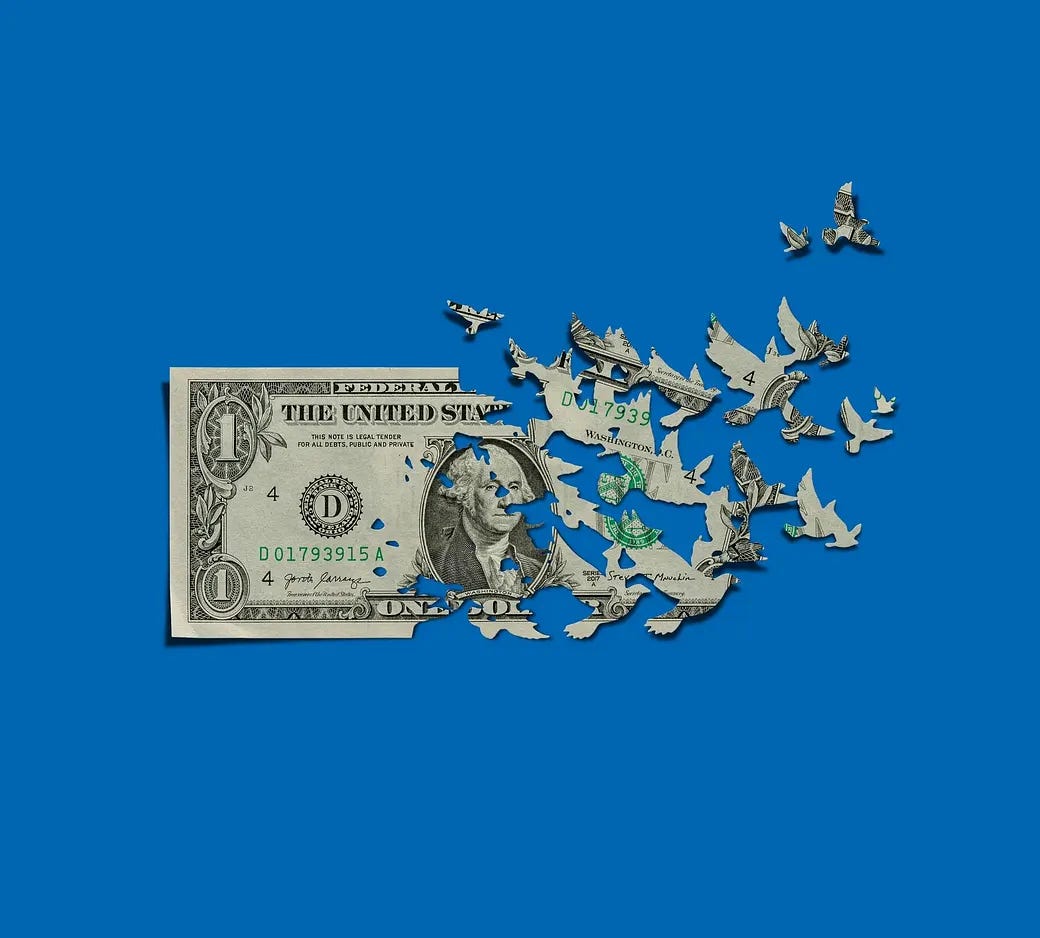
To global investors, the United States is a bad bet under Trump, according to a chilling analysis by New York Times economic policy writer Alan Rappeport.
“Global investors are balking at U.S. bonds. Talk of the dollar’s dwindling power is getting louder. Foreign governments are hauling their gold out of American vaults,” the pieces opens.
Almost two years into President Trump’s second term, the world economy is increasingly looking for ways to distance itself from America. Concerns about a $40 trillion debt burden, the excessive use of sanctions to solve foreign policy problems and Mr. Trump’s penchant for pushing the limits of the rule of law are raising questions about the appeal of the United States as a haven for global investment.
Despite pledges by foreign companies and nations to invest in the United States — in many cases to curry favor with the White House — capital is starting to seek alternative destinations.
My take: Elections have consequences, and the 2024 presidential election will leave lasting scars.
STORY #8
The story to watch today is the Federal Reserve meeting, which is expected to conclude with a quarter-point hike in the interest rate — and a presidential temper tantrum.
The new Fed chair, Kevin Warsh, was installed by Trump to cut rates ahead of midterm elections that will be a referendum on White House economic policies. But an interest rate increase is widely seen as the proper salve to inflationary pressures Trump has failed to tame.
The Fed will release its rate decision at 2 p.m. ET.
Warsh will hold a news conference at 2:30 p.m.
Trump may rail into the night.

STORY #9
Feeling tired all the time? You’re not alone.
Over 70% of U.S. adults say they experienced fatigue on multiple days over the past three months, according to a new report by the Centers for Disease Control and Prevention’s National Center for Health Statistics.
Women and younger adults reported more frequent fatigue than men.
What’s driving the droopy-eye epidemic? “Anxiety (69.6%), cognition difficulty (46.1%), and symptoms of depression (45.0%) were among the three most frequently co-occurring functioning difficulties reported by adults who experienced frequent fatigue, the report said. Additionally, those who suffered from frequent fatigue were more than three times as likely to have symptoms of depression and about twice as likely to report cognition difficulty or symptoms of anxiety,” USA Today reports.
My take: The sorry state of politics and government might have something to do with it. I’m certainly tired of this s***.
THAT’S A WRAP. Putting the news behind me for a few hours of rewarding work and a date tonight with my bride.
Enjoy your day. Love your people.

Why are we letting the orange turd do this?